Tuesday, November 4, 2008

What about the animals?

With climate change comes more than just change to the climate. Aside from weather changes, and changes in the artic, different lifeforms are being hit hard by global warming. It's one thing when Darwinism takes course, but to see animals die as a result of manmade emissions is a tragedy. Although, we have yet to reach that point we have clearly started our course.

The National Wildlife Federation has printed out an article detailing the affects animals feeling as a result of global warming. Penguins, a favorite animal of many is struggling to find food. As sea ice diminishes so does the amount of algae in water, making eating for penguins more and more difficult as the days go on. Mosquitos are thriving now more than ever due to global warming, which is a major problem for Caribou. They now have to expend more energy keeping the pests away and get to spend less energy and getting food. Monarch butterflies often migrate to Mexico where they seek shelter from rain in trees, but with changes in weather the trees may not be enough to protect the butterflies. Sixteen percent of coral reefs were wiped out in one year. temperature changes in the sea have drastic affects on coral so changes in the sea need to be closely monitered over the years if we want to maintain life forms there.

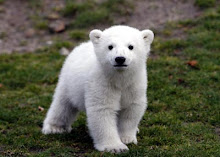
Some researchers predict that many of our hibernating creatures may soon. It's actually a mystery, there are countless reasons as to why something should be done, yet nothing is being done. Perhaps when the penguins, polar bear, caribou and butterflies are all gone, we'll realize what a mistake we've all made.

Tuesday, October 28, 2008

Global Warming in China

Global warming is an issue that should be of major concern in the United States. However as the name implies it's a global issue. One country that's of particular interest to me is China. China was heavily criticized for its emissions leading up to the Beijing olympics and many athletes even refused to train in Beijing because of such high emissions. So how much is China contributing to the climate change?

USA Today put out an article last year which really puts things into perspective. China relies heavily on coal to provide energy, almost 70 % to be exact. None of this being the clean coal that our presidential candidates reference. It also appears unlikely that any moves will be made in the near future to remove their dependence from coal. China is regarded as an emerging superpower, however it still hasn't reached that status yet and therefore it seriously lacks the funds to invest in alternative fuels. It's a scary thought because according to USA Today China is on pace to pass us as the largest emitters of greenhouse gases.

China happens to be one of the major countries which has chosen to not ratify the outlines put forth in the Kyoto Protocal. It's a move which could substantially hurt china. Many of their rivers have already begun to shrink in size due to evaporation and many of the ecosystems in China are predicted to face major damage. As a developing super power China needs to understand that it needs to put itself in a position where they are taking responsibility for global warming and are setting an example for others as well.

Monday, October 27, 2008

The Theory

Many understand the idea of global warming and climate change, but how real is it? Countless articles have been written, documentaries have examined the issue and scientists have pushed for action, but there isn't much acknowledgment in regards to climate change so how real can it be? Those who are for it have made numerous claims, citing our melting polar ice caps, increased greenhouse gases, as well as other reasons as proof of the dilemma. However many scientists are clearly opposed to the idea of global warming and feel the temperature changes are nothing to worry about.

The topic of climate change seems like a straight forward topic, however it does attract believers and disbelievers. Although there may not be as many reasons for being for or against climate change as other controversial topics, climate change still receives much attention from two sides. For those who believe in climate change, their motivation for believing in it is pretty simple. They see that damage in the arctic regions has already begun to take place and feel we need to change our ways soon if we're ever going to reverse the effects of greenhouse gases. The drastic consequences would be detrimental to future generations if scientists are indeed correct. Extreme storms and the extinction of species in the arctic regions are only a few of the possible outcomes if trends continue.

The disbelievers of climate change are a little more complicated to understand. Their reasoning is very unclear however I have theories as to why they choose to not believe. One obvious reason is we have yet to experience many of the extreme conditions scientists are predicting will come from climate change. Until they get hard concrete evidence they will remain disbelievers. Secondly, there's evidence which points to a possibility that changing temperatures may not be as harmful as believed since this wouldn't be the first time in earth's history where temperatures were rising. Perhaps to be more skeptical though, many disbelievers choose not to believe because of how much more expensive it would be to believe. In a nation that relies heavily on fossil fuels, the changes needed to take place to reduce fossil fuel emissions would require a greater effort into the use of alternative energy. Although it could possibly be better for us in the long run, our struggling economy has no room to make such a commitment toward alternative energies that could reduce the effects of greenhouse gases.

Theoretically I feel the proper solution towards global warming would be a cap-and-trade system. It would slowly ween us off of fossil fuels and provide incentives towards researching alternative fuels. In addition there need to be tax breaks for automobiles and machinery which run on alternative energy. Only with set limitations and big incentives will we finally look away from fossil fuels which damage our environment and its a sad realization we don't put greater effort into alternative energy considering many of our providers of fossil fuels don't think too highly of us. Overall, climate change is very under discussed and politically there isn't much at stake. I feel people are too uneducated on the issue and don't understand the seriousness of the situation. People also choose to be very naive about the situation. A visit to either presidential candidates website shows various goals, including reductions of fossil fuel emmisons; Obama claims a reduction of 80% by 2050, and McCain 60%. I would be surprised if either candidate reduces emissions by 5%. For years candidates have thrown out solutions and goals towards solving global warming and each year the situation gets worse. Also, there are those who think because 2050 is so far away the candidates are setting a realistic timeline. However i feel each candidate just wants to push the issue as far back as possible because by 2050 no one will look this far back and say either of these candidates failed if the goals were not accomplished.

My solution isn't necessarily a simple one. It will force industries perhaps into harder times by capping their emissions. However i feel too much effort is being put into keeping us one of the current dominant power and more effort needs to be put in keeping us stable for the long run.

Monday, October 20, 2008

What is North Carolina Doing?

Lately i've been pretty critical of the current environmental policies as well as possible future policies. However as a student in North Carolina i have been completely negligent of efforts being put forth on a local level. According to EnvironmentNorthCarolina, North Carolina is the third most vulnerable state to rising sea levels. So what exactly have politicians done to help in the fight against global warming?

EnvironmentNorthCarolina provides clear points of the numerous actions North Carolina has already taken to improve our environment. In 2002 the Clean Smokestacks Act was passed, requiring the dirtiest coal powered plants to reduce smog pollution by 70%. In 2004 a bill was passed which would make more clean energy cars available for consumers. In 2005 legislation was passed MTBE, a toxic gasoline additive. Norh Carolina has also dedicated 1%percent of its budget towards preserving ecosystems which could be gone if more isn't done to combat the climate change.

State representatives are also working vigourosly against global warming and offer hope in the fight to save our environment. EnvironmentNorthCarolina reports that 98% of the time Representative Heath Shuler voted to implement more eco-friendly initiatives. He voted on bills that would have created over 60,000 green jobs as well as saved North Carolinians 800 million dollars in energy costs. Shuler has managed to face tough opposition from Senior Senator Elizabeth Dole who according to EnvironmentNorthCarolina has offered big tax breaks for oil companies and has consistently voted against bills that could reduce North Carolinas dependence on oil. It's good to see a young politician like Shuler who hasn't been corrupted by the big industries and the lure of making a profit.

Sunday, October 19, 2008

A look in Cap-and-Trade

A cap-and-trade system appears to be the overwhelming favorite among the solutions to reduce our greenhouse emissions in America. However, not many fully understand whats entailed with a cap-and-trade system. In addition, Americas economic woes may leave many politicians reconsidering how we will solve our environmental troubles. What's not surprising is that we are not the only country which is dealing with environmental issues. Canada, our neighbor to the north is also trying to put forth an effort in reducing green house emmisions. In British Columbia there have been huge debates over whether a cap-and-trade system is truly the best solution.

The Vancouver Sun recently put out an article where two of the major parties in B.C. are in a major argument over the issue. The Liberals want to impliment a carbon tax and the New Democratic Party wants to see a cap-and-trade policy. Two different policies which look to provide similar results. What are they and which would work best considering our economic conditions?

A carbon tax is as simple as the name. With a carbon tax a tax would be placed on all fossil fuels. A carbon tax would encourage industries to search for alternative fuels while at the same time we would receive funds from those who continue to produce heavy emissions. Its a tax that would be easy to enforce and granted that no loopholes are involved would be very effective. On the other hand you have a cap-and-trade system. In this system the government implements a set limit on the amount of emmisions an industry is allowed to produce. If a company fails to maintain their emissions below the limit they will have to pay a cost similar to a fine. However in a cap-and-trade system a monetary value would be assigned per each tonne of emmision which would be known as permits. This would allow those who significantly reduce their emmisions to trade or sell away permits. Once again it encourages companies to reduce emissions, but the difference here is that there is a set limit so you're virtually guaranteed to reduce emmissions to a point that would be beneficial for the environment.

Personally I feel the best thing that can be done at the moment in the U.S. is to implement a carbon tax. Altough a cap-and-trade program would be ideal, now is not the right time to set limitations on already struggling industries. At Carbon Tax Center they point out flaws in having a carbon tax. For starters many industries would just pay the tax and avoid alternative fuels. Not to mention that most industries would most likely raise prices to make up the costs. The positive consequences however are that we would at least be setting a precedent towards moving away from fossil fuels and looking for incentives to use alternative eco-friendly fuels. Its a plan that would get us started in the right direction and would be a good compromise for all.

How much will be left?

As I bring up my web browser, msn.com comes up and on their front page they are discussing how much money will be left in our economy for the environment. Most people by now are aware of the 70 billion dollar bailout plan which was recently passed. Although in the past three presidential debates moderators have asked the candidates what they intend to cut back on due to our economic woes, neither have given a straight answer. However one area that will most likely lose funding is environmental spending.

John McCain has promised to cut greenhouse gas emissions 60% by 2050, Obama is even bolder, promising an 80% reduction. It's very unlikely that we'll see those reductions if our economy continues to weaken. The most popular remedy for global warming as mentioned by msn is to have a cap-and-trade system. However placing limitations on industries would seriously hurt the possibility of any economic growth.

The obvious implication of delaying efforts to improve the conditions of the environment is that by 2050 many environmental goals will not be reached. As a result, many scientists are predicting Greenland as well as the west Artic will lose its ice sheets and thus we'll have a dangerous rise in sea levels. This would be detrimental to the habitats of many animals, plants and of course humans. The time to act is now and we need a leader who will recognize that althouhg the economy must come first, the environment is not something that can be tossed to the side.

Tuesday, October 14, 2008

The Economy

Our banks were suffering great losses, so our government has stepped in to bail them out. 250 billion dollars will be put into banks to get them out of the hole they've put themselves into. With help from the Europeans a plan has been crafted which should help us avoid going into a recession or worse a depression. The banks won't be allowed to hold the billions, they will have to use it in a way intended to stimulate the economy. In other words, the U.S. has nationalized our banks, and the banks will be slightly regulated, its a very socialistic idea for a democratic country.

Our banks are being bailed out and recent news shows they're in need of dire help. Our stock markets have been dropping at a frightening rate. The DOW is well below 10,000 points and steadily dropping. By bailing the banks out of huge losses, the government hopes to regain the strength of the stock market while also profiting from this ordeal at some point. Of course Conservatives are heavily opposed to such a bill, but we've allowed bad investments to build up to a point where the only thing that could save us was to take a socialistic point of view at our economy.

This may be off topic, but what does this mean for our war overseas. We invade foreign territories and try to bring democracy to countries overseas as if its the best form of government. However our recent failure makes you wonder if we should be telling anyone else how they should run their country.